Blog
2026 Complete Home EV Charger Installation Guide: Outlet Types, Panel Capacity & Wiring Explained
Introduction
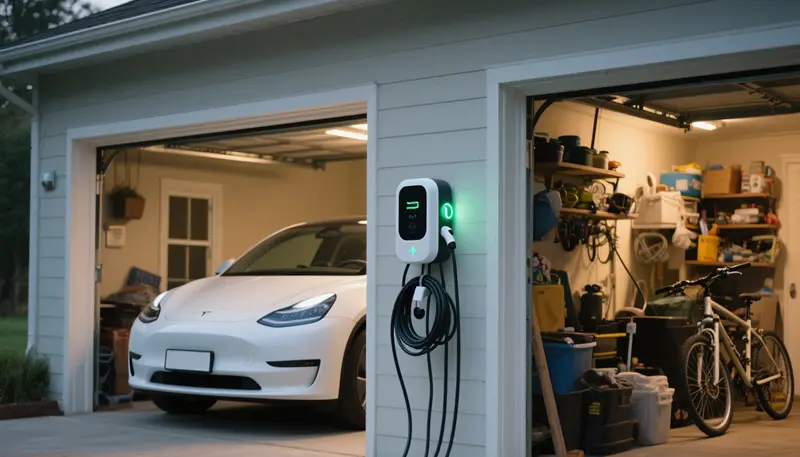
More and more drivers are installing EV chargers at home — no more hunting for public chargers, no more waiting in line. Just plug in at night and wake up with a full battery.
But before you buy anything, the questions start piling up fast. What’s the difference between a NEMA 14-50 and a 6-50 outlet? Will your 100A electrical panel handle it? Hardwired or plug-in — which one actually makes sense for your situation? And honestly, how much is this going to cost?
This is the pillar page for everything home EV charger installation. If you’re new to this, bookmark this — it’s everything you need in one place.
Table of Contents
- Step 1: Will Your Home Even Support It? Panel Capacity Explained
- NEMA 14-50 vs. NEMA 6-50: What’s the Difference?
- Hardwired vs. Plug-In: Which Should You Choose?
- Real Installation Costs in 2026
- The Installation Process: DIY or find certified EV charger installers?
- FlagTools EV Charger: Why It’s a Smart Home Choice
- FAQ
Step 1: Will Your Home Even Support It? Panel Capacity Explained
This is the question people worry about most before buying: “Is my electrical panel going to handle an EV charger?”
The short answer: probably yes, especially for a 7–11KW charger. Here’s why.
What Is Panel Capacity, and Why Does It Matter?
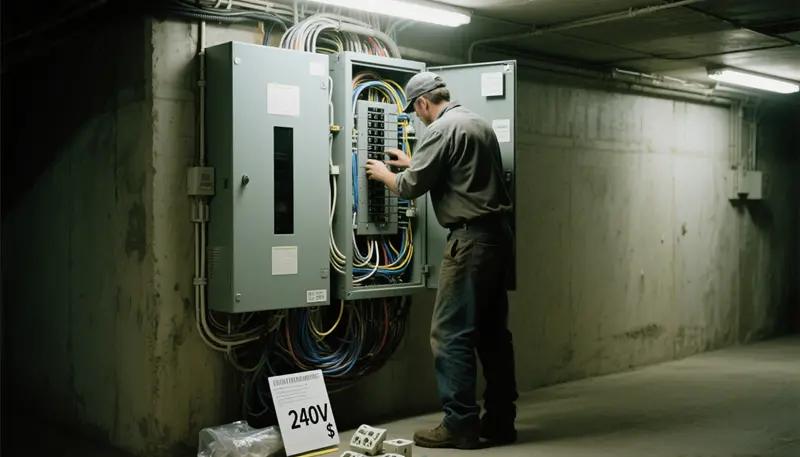
Your electrical panel (also called a service panel or breaker box) is the hub of your home’s electrical system. EV chargers draw between 32A and 50A at 240V, which is significant. If your panel is already heavily loaded when you add an EV charger, you could trip breakers or — in extreme cases — create a fire hazard.
How to Figure Out Your Panel Capacity in 5 Minutes
Step 1: Find your main breaker
Open your electrical panel cover (usually in a basement, garage, or utility closet). Look for the largest breaker — that’s your main breaker. It should say something like “100A,” “150A,” or “200A.”
Step 2: Check your current load
Make a quick list of high-draw appliances in your home — central AC, electric water heater, range, dryer, and any other major appliances.
Step 3: Do you have room?
EV chargers run on a dedicated 240V circuit. As long as your panel has at least two open spaces for new breakers, you can typically add one.
The Good News: Most 100A Panels Are Fine
| Panel Size | EV Charger It Supports | Upgrade Needed? |
|---|---|---|
| 100A main | 7KW (around 32A) — assess first | May need minor upgrade |
| 100A main (200A service line) | 11KW (around 16–32A) | Usually no upgrade needed |
| 150A main | 11KW–22KW | Usually no upgrade needed |
| 200A main | 22KW (around 32A) | Definitely no upgrade needed |
Pro tip: Get an electrician to do an on-site assessment before you commit to anything. This typically runs $100–$200, and it’s money well spent.
NEMA 14-50 vs. NEMA 6-50: What’s the Difference?
This comes up constantly, and the confusion costs people money. Let’s settle it clearly.
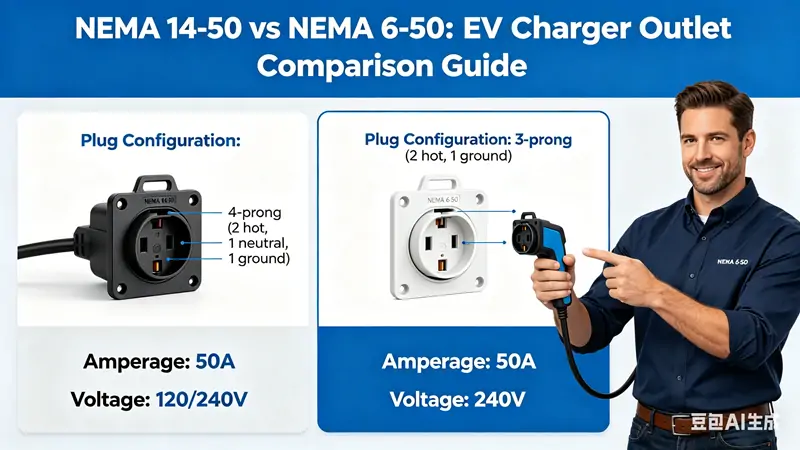
What Is a NEMA 14-50?
The NEMA 14-50 is a 4-prong, 50-amp outlet configuration. It’s the most common outlet for electric ranges and dryers across North America, and increasingly for plug-in EV chargers.
Why people like it: Most portable EV chargers come with a 14-50 plug right in the box. Outlets and breakers are cheap and everywhere.
Downsides: Outlet lifespan is around 1,000 plug cycles under load. Less if you’re plugging and unplugging daily.
What Is a NEMA 6-50?
The NEMA 6-50 looks similar but has a different pin configuration: two hot legs plus ground — no neutral pin. It’s actually the preferred choice among many EV professionals.
Why more pros recommend it:
- Outlet lifespan is 10,000+ cycles — 10x longer than 14-50
- No neutral pin means fewer contact points and less heat buildup at high current
- More stable connection, less resistance, cooler operation
Side-by-Side Comparison
| Feature | NEMA 14-50 | NEMA 6-50 |
|---|---|---|
| Pin config | L1 + L2 + N + G | L1 + L2 + G |
| Max power | ~9.6KW | ~9.6–12KW |
| Cycle lifespan | ~1,000 cycles | ~10,000+ cycles |
| Best for | Travel / multiple locations | Fixed home installation |
Recommendation for fixed home installation: NEMA 6-50. The outlet lasts longer, runs cooler, and is the cleaner professional choice for a permanently mounted charger.
Hardwired vs. Plug-In: Which Should You Choose?
What Does “Hardwired” Mean?
Hardwired means the charger is permanently connected to your home’s electrical system. A wire runs from your panel directly into the charger’s internal wiring terminals. There’s no plug — it’s fixed to the wall.
What Does “Plug-In” Mean?
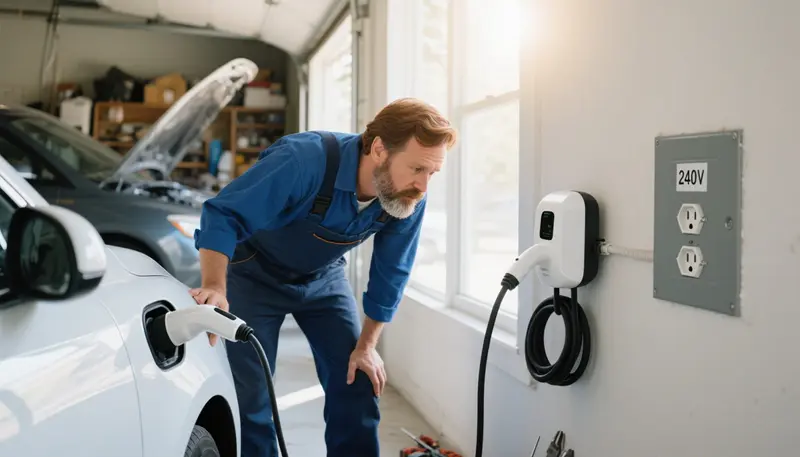
Plug-in chargers use an industrial-grade outlet (like NEMA 6-50 or 14-50) to connect to a dedicated circuit. The charger has a cord with a plug on the end, and it goes into the outlet like any big appliance.
Head-to-Head Comparison
| Factor | Hardwired | Plug-In |
|---|---|---|
| Installation complexity | Requires permanent wiring by an electrician | Outlet pre-installed, then just plug in |
| Flexibility | Fixed — can’t easily move | Removable — take it with you |
| Max power | Can support higher (22KW+) | Usually capped at 40–48A (9.6–11.5KW) |
| Best for | Permanent installs, high-power users | Most homeowners |
Our Recommendation
For 90% of homeowners: Plug-in + NEMA 6-50. Simple to install, easy to service, and plenty of power for daily driving needs.
For permanent, high-power installs: Hardwired. If you need the full 22KW, hardwired is the cleaner solution.
Real Installation Costs in 2026
Cost Breakdown
| Item | Cost Range (USD) |
|---|---|
| EV charger (equipment) | $300–$800 |
| Outlet installation (NEMA 6-50 or 14-50) | $150–$300 |
| Hardwired circuit (wire runs + terminations) | $200–$600 |
| Electrician inspection/assessment | $100–$200 |
| Panel upgrades (only if needed) | $500–$3,000 |
| Main panel upgrade (rare cases only) | $1,000–$5,000 |
| Permits and inspections | $50–$300 |
How to Save Money
1. Use an existing circuit where you can. If you have an electric dryer outlet nearby, a product like the EV Dryer Buddy lets you share that circuit for your EV charger at low power (7KW). No new wiring needed.
2. Look for rebates and tax credits. The federal tax credit covers 30% of installation costs, up to $1,000. Many utility companies and states offer additional incentives.
The Installation Process: DIY or find certified EV charger installers?
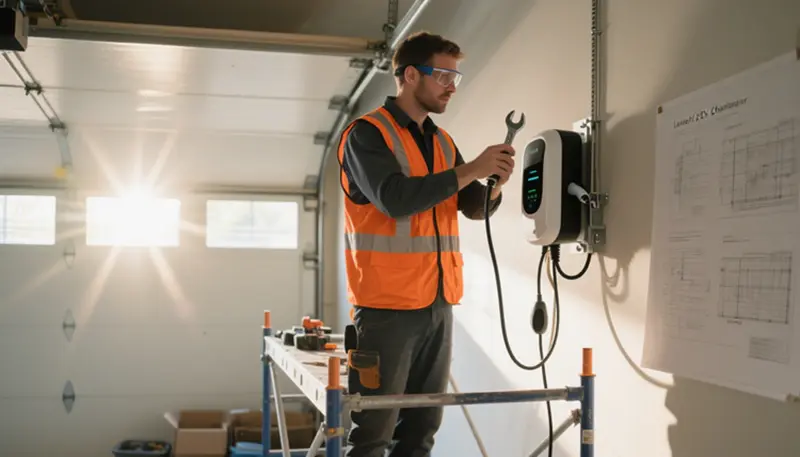
Do You Actually Need an Electrician?
Yes — almost always. Here’s why:
- 240V is no joke. A mistake with 240V AC can cause serious injury.
- Permits and inspections. Most jurisdictions require a permit and inspection for any new 240V circuit.
- Code compliance. An electrician ensures the work meets local electrical codes.
- Safety. EV chargers run at high current for long periods. Poor installation is genuinely dangerous.
The Typical Installation Process
- Choose your location — Garage wall near your parking spot, outdoor wall with covered parking, or a dedicated pedestal.
- Get an electrician to assess — They’ll measure available capacity, recommend the best circuit route, and give you a firm quote.
- Install the 240V circuit — Electrician pulls the wire, installs the breaker, runs the cable, and mounts the outlet.
- Mount the charger and test — Verify grounding, check voltages, test charging communication.
- Get it inspected and documented — Keep copies for insurance and resale purposes.
FlagTools EV Charger: Why It’s a Smart Home Choice
After all that, choosing the right charger matters just as much as the installation. FlagTools EV Charger is purpose-built for home and light commercial use:
- Universal Compatibility: Supports Type 1 (North America/Japan), Type 2 (Europe), and GBT (China) — covers Tesla, Nissan Leaf, Audi e-tron, and virtually every other mainstream EV.
- Three Power Tiers: 7KW for daily commuting, 11KW for most households, 22KW for high-demand users. One device handles every power level.
- IP65 Weather Rating: Fully dust-tight and resistant to water jets. Indoor garage, covered patio, or open carport — it handles all of them.
- Smart Connectivity, Two Ways: WiFi + Bluetooth dual-mode, paired with a mobile app. Check charging status, start or stop remotely, set schedules. RFID card support means every driver in the household can unlock and use it.
- 8-Layer Safety System: Includes Dynamic Voltage Guard and ThermoSafe. Operates reliably from -30°C to +50°C.
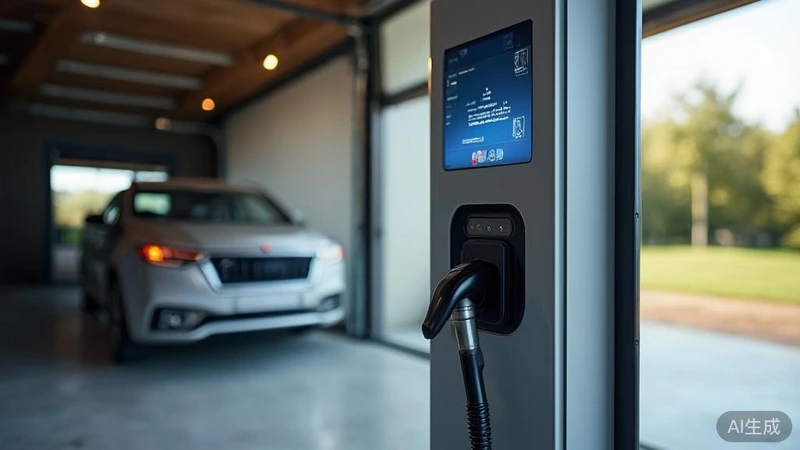
- 4.3-inch LCD Screen: Real-time charging status, current, state of charge, and error codes — no app required.
- Flexible Mounting: Wall-mount or pedestal. 5-meter charging cable (extendable to 10m) covers most home parking layouts.
FAQ
Q: Does a home EV charger permit requirements requirements?
A: In most cases, yes. A new 240V circuit typically requires an electrical permit and inspection. Requirements vary by city and county — your electrician will handle this.
Q: I have a 100A panel. Can I install an 11KW EV charger?
A: In most cases, yes. An 11KW charger typically runs fine on a 100A panel without an upgrade. Have an electrician assess your specific panel’s load first.
Q: Which is safer — hardwired or plug-in?
A: Both are safe when installed correctly. Hardwired connections are slightly more robust long-term because there’s no mechanical plug connection that can wear. The choice should be driven by your power needs and whether you want the charger to be portable.
Q: How much does a home EV charger installation actually cost?
A: Using an existing dryer circuit can bring your installation cost to under $500 total. A full new circuit with a panel upgrade can run $3,000–$5,000, but that’s only in older homes with severely undersized panels. Most homeowners spend $500–$1,500 for a clean professional install.
Q: Will charging at night affect my other appliances?
A: No. EV chargers run on their own dedicated 240V circuit — they don’t share with your other appliances. Many smart chargers also support scheduling, so you can set them to charge during off-peak rate hours automatically.
Q: Can I install an EV charger outdoors?
A: Yes — but you need a charger rated for outdoor use. FlagTools EV Charger’s IP65 rating means it’s designed for outdoor installations. For outdoor setups, a hardwired connection is generally preferred.
Q: I rent. Can I install a home EV charger?
A: You’ll need your landlord’s permission. Options: ask the landlord to cover the installation (it adds value to the property), use a Level 1 portable charger on a standard 120V outlet, or negotiate a shared cost arrangement.
Take the Next Step
Installing a home EV charger isn’t complicated, but every detail matters. Here’s your quick-action checklist:
- Assess your panel — Check your main breaker size and count available spaces.
- Choose your outlet type — Fixed home installation: NEMA 6-50 for durability. Need portability: NEMA 14-50.
- Decide on hardwired vs. plug-in — Most households: plug-in is the smarter value. High-power daily users: hardwired wins.
- find certified EV charger installers — Non-negotiable for 240V work, and required for rebates and insurance.
- Pick the right charger — Safety certifications, weather rating, smart features, and multi-standard compatibility matter more than raw power specs.
, or check our complete 240V outlet cost guide for a full breakdown
Ready to set up your home charging? Start with an assessment, or check our complete 240V outlet cost breakdown for full cost details, then make an informed choice, and you’ll be charging at home before you know it.
Ready to Install a Home EV Charger?
FlagTools offers a complete 7-22KW home EV charging solution — browse our product range or get a same-day quote from certified EV charger installers near you.
Related: NEMA 14-50 vs 6-50
Related: No Panel Upgrade
Related: Hardwired vs Plug-in