Blog
No Panel Upgrade Needed: How to Install a High-Power EV Charger on Your Existing Electrical System
Most homeowners assume installing a high-power EV charger means a costly panel upgrade — but it doesn’t have to. With the right equipment and smart circuit planning, a 100A or 200A electrical panel is often more than enough for Level 2 home EV charging.
In this guide, we’ll cover: whether your panel can handle an EV charger, how to maximize charging efficiency without upgrades, and exactly which setup works for your home.
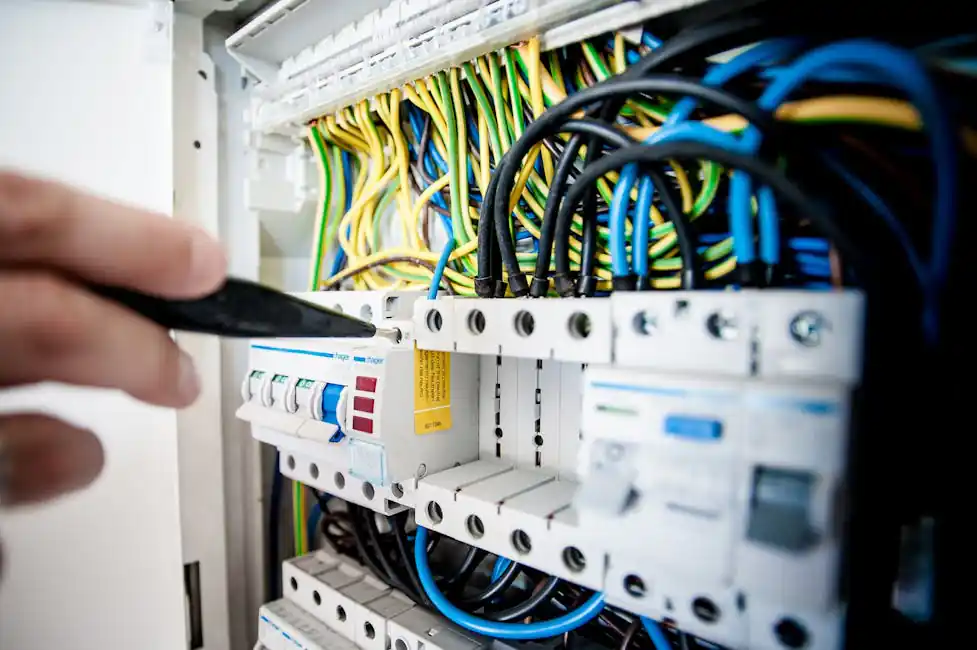
What Does “100A Panel” Actually Mean?
Before buying anything, understand what your electrical panel can actually deliver.
Your main breaker (not the meter itself) is what determines your home’s usable capacity. Most homes built after 2000 come with a 200A main breaker — and that’s plenty for Level 2 EV charging. A 100A main breaker is less common but still workable with the right planning.
Quick Reference: EV Charger Power Draw
- Level 1 (120V, 12A): ~1.4 kW — adds 4-5 miles of range per hour
- Level 2 (240V, 32A): ~7 kW — adds 25-30 miles per hour
- Level 2 (240V, 48A): ~11 kW — adds 40-45 miles per hour
- Level 2 (240V, 50A): ~12 kW — adds 45-50 miles per hour
How to Calculate Your Available Capacity in 3 Steps
Step 1: Check Your Main Breaker Size
Find your main breaker (usually in the basement, garage, or utility closet). It will be labeled 100A, 150A, or 200A. If it’s 200A, you’re in great shape for Level 2 charging.
Step 2: Estimate Your Typical Nighttime Load
EV charging typically runs at night — when most high-draw appliances are off. Make a quick list of what runs after 10 PM: refrigerator, lights, TV, HVAC fan. For most homes, that’s only 2-3 kW of baseline load.
Step 3: Check for Open Circuit Slots
A Level 2 EV charger needs a dedicated 240V double-pole circuit. Check if your panel has at least one open slot. If it’s full, a sub-panel might be needed — but this is separate from panel capacity, not a meter upgrade.
Which EV Charger for a 100A or 200A Panel?
For 200A Main Breaker — Almost Any Level 2 Charger Works
- 7-11 kW (32A-48A): No issues for virtually all homes. Fits easily within typical nighttime headroom.
- 12 kW (50A): Works in most 200A homes. Verify your nighttime load before committing.
- 22 kW (96A): Requires careful verification of panel headroom. Choose a charger with adjustable current output.
For 100A Main Breaker — More Careful Planning Needed
- 7 kW (32A): Safe in most 100A homes with modest other loads.
- 11-12 kW (48-50A): Verify peak load carefully. Schedule charging overnight when other loads are minimal.
4 Strategies to Maximize Charging Without Upgrading
Strategy 1: Choose a Charger with Adjustable Current
Not every day requires full-power charging. Pick a charger that lets you dial back the current — running at 32A instead of 48A on nights when you need extra headroom. Most quality chargers support this via a control panel or mobile app.
Strategy 2: Use Smart Load Balancing
Dynamic load balancing automatically adjusts your EV charger’s output based on your home’s real-time total consumption. If you turn on the dryer and AC, the charger steps down. When they turn off, it resumes full speed. This lets you run a 48A charger safely on a panel that would otherwise be tight.
Strategy 3: Schedule Charging for Off-Peak Hours
Most homes use only 2-3 kW between 10 PM and 6 AM. By scheduling your EV to charge during this window, you have 140-170A of available capacity — more than enough for even a 22 kW charger.
Strategy 4: Pick a High-Efficiency Charger
Charging efficiency matters. Some budget chargers lose 10-15% of energy as heat during AC-to-DC conversion. A high-efficiency charger (95%+ efficiency) charges faster, runs cooler, and draws less apparent power from your panel.
Hardwired vs. Plug-In: Which Is Right for Your Panel?
If you’ve read our comparison of NEMA 14-50 vs. NEMA 6-50 outlets, the basics will feel familiar.
- NEMA 14-50 outlet (50A): Most common for RV and EV use. Supports up to 9.6 kW. Easy to install, portable if needed.
- NEMA 6-50 outlet (50A): Equally powerful, no grounded neutral pin, slightly more durable for fixed outdoor installations.
- Hardwired connection: Required for chargers above 48A in most jurisdictions. Permanent, no outlet to overheat, and typically required for 22 kW installs.
FAQ: EV Charging on Existing Electrical Panels
Will my breaker trip when charging and running other appliances?
Not if the math is right. If your total current draw exceeds the main breaker rating, it will trip — but smart load balancing prevents this. Choose a charger with built-in overload protection.
Is a 22 kW charger safe on a 100A panel?
Safe — as long as the total current (including all other loads) stays under 100A. A 22 kW charger running at 48A adjustable output is well within range for most 100A homes at night.
Do I need my utility company’s permission?
Usually no, if you’re within your meter’s existing capacity. High-power dedicated circuits (60A+) may require a permit. For 22 kW installs, check local code requirements.
What does professional installation cost?
- NEMA 14-50 or 6-50 outlet: $150-$500
- Hardwired circuit (up to 60A): $300-$800
- Sub-panel addition (if panel is full): $500-$1,500
Compare that to a full panel upgrade at $2,000-$5,000+, and you can see why maximizing your existing system makes financial sense.
Bottom Line
Most American homes with a 200A main breaker don’t need any panel or meter upgrades for Level 2 EV charging. Even 100A panels can often support 7-11 kW chargers with smart scheduling. The key is choosing the right equipment, verifying your actual load, and using smart features like load balancing to stay safely within your capacity.
Before spending thousands on a panel upgrade, get the numbers right first.
Ready to find the right charger for your home’s electrical setup?
Browse FlagTools EV Chargers — 7kW to 22kW with adjustable current and smart load balancing
Read our Installation Guide for complete guide.
Related: Hardwired vs Plug-in