Blog
EV Charging in Winter: Why Your Charger Slows Down in Cold Weather and What to Do About It
Plugged your EV in last night. Came out this morning. Half a charge. Sound familiar? Winter hits hard on EV batteries, and charging speed loss in freezing temperatures is real. But here’s the thing — it’s not your Level 2 charger that’s broken. Your battery is just doing what it’s supposed to do in the cold.
This is your no-fluff EV battery charging in cold weather guide. We’ll break down exactly why your charger slows down, how much range you actually lose, and what you can do about it right now.
Why Cold Weather Slows Your EV Charging
The Science Behind Cold Weather Range Loss
Lithium-ion batteries love moderate temperatures. When it’s 60–80°F (15–27°C), your battery charges at full speed. Drop below 32°F (0°C), and things start changing fast.
Here’s why:
Cold increases internal resistance. Think of it like blood flow in your body — everything moves slower when you’re freezing. Your battery’s chemistry works the same way. Ions travel more slowly between the cathode and anode, which means less energy flows in during charging.
The battery management system (BMS) steps in. Your EV’s computer detects the cold and deliberately reduces charging speed. It’s protecting the battery from damage. Fast-charging a frozen lithium-ion cell can cause permanent degradation — the BMS knows this and throttles accordingly.
Preconditioning kicks in first. When you plug in at low temps, your EV often uses charging power to warm the battery pack before it actually starts adding miles. That takes energy and time.
The result? Your Level 2 charger that normally pushes 7–11 kW might deliver only 3–5 kW for the first 20–30 minutes in freezing weather.
Related: Not sure which charger power level is right for your home? Our 7KW vs 11KW vs 22KW EV charger guide breaks down exactly how much range each unit adds per hour.
Charging Speed Loss in Freezing Temperatures — The Real Numbers
Here’s what charging speed cold weather chart data actually looks like:
| Outside Temperature | Level 2 Charging Speed (7KW unit) | Effective Range Recovery Per Hour |
|---|---|---|
| 70°F (21°C) | ~7 kW | ~25–30 miles/hour |
| 50°F (10°C) | ~6 kW | ~20–25 miles/hour |
| 32°F (0°C) | ~4–5 kW | ~15–20 miles/hour |
| 0°F (-18°C) | ~2–3 kW | ~8–12 miles/hour |
| -10°F (-23°C) | ~1–2 kW | ~4–8 miles/hour |
These are estimates. Your actual numbers depend on your specific EV model, battery size, and State of Charge when you plugged in. But the trend is unmistakable — the colder it gets, the slower your Level 2 charger winter range loss adds up.
For context: At -10°F, a 7KW Level 2 charger might only deliver 1–2 KW to your battery. That’s a 70–85% speed loss compared to ideal conditions. Some EVs in extreme cold have been observed charging at just 1 kW on a 7KW unit.
How Cold Affects EV Battery Charging — Specific Issues to Watch
Level 2 Charger Winter Range Loss Is Worse at High States of Charge
Here’s something most articles skip: cold weather hits harder when your battery is nearly full.
At high State of Charge (above 80%), lithium ions have less space to move into during charging. In cold weather, this problem compounds. The battery’s ability to accept charge diminishes even further when it’s almost full.
Practical tip: If you can, charge when your battery is between 20–50%. This is the sweet spot for cold weather charging speed.
Charging Speed Loss in Freezing Temperatures Is Worse With DC Fast Charging
Many owners assume DC fast chargers handle cold weather better because they push more power. But actually, the opposite can be true.
Most DC fast chargers will reduce or stop charging if your battery is too cold. Many EVs won’t allow DC fast charging until the battery warms up — either through slow AC charging first or through active preconditioning that can take 15–45 minutes.
The irony: You drive to a fast charger to save time, but in winter you might wait 30 minutes for the battery to warm up before it takes a single electron.
Your 12V Battery Can Die in Extreme Cold
Related read: Smart charging features matter year-round. Learn how to troubleshoot common EV charger WiFi connectivity issues that can affect your charging schedule.
Most EVs have a traditional 12V battery that powers accessories, computers, and the charge port latch. Cold weather is brutal on 12V batteries.
If your 12V battery is weak, it can fail to engage the charging system properly. Some owners have reported their EVs won’t start charging in the cold because the 12V system couldn’t close the necessary relays.
Tip: If you live somewhere with harsh winters, keep your 12V battery healthy or consider a battery heater.
EV Charging Speed Cold Weather Chart — What You Can Actually Do
What You Can Control: 5 Practical Fixes
1. Preheat Your EV While Still Plugged In
This is the single biggest win. Most EVs let you schedule preconditioning — set it to start 20–30 minutes before you leave. The car draws power from the charger instead of your battery, warming up the pack before you need to drive.
When the battery is already warm, your Level 2 charger runs at full speed from the moment you plug in. No waiting for the BMS to warm things up.
2. Park in a Garage or Warmer Space
Shocking, right? But seriously — even an unheated garage stays 10–20°F warmer than outside. That difference matters. A garage at 30°F is far better for charging than a car sitting outside at 10°F.
If you don’t have a garage, a car cover can provide a small buffer.
3. Plug In Immediately After Driving
Your battery is warmest right after a drive. Those residual heat levels fade fast, but if you plug in within 10–15 minutes of parking, you’re starting from a warmer baseline.
Waiting an hour or two for the battery to fully cool before plugging in means you’re starting cold every time.
4. Use Scheduled Charging Smartly
Most EVs and Level 2 chargers support scheduled charging. Don’t just set it to start at midnight because electricity is cheap. Set it to start early enough that charging finishes right around when you need to leave — so the battery is still warm from the charging process.
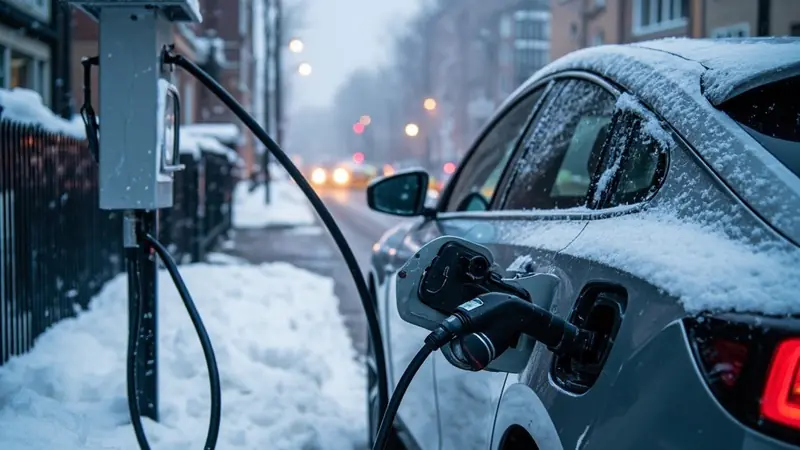
5. Keep Snow and Ice Off the Charge Port
Ice buildup around the charge port can prevent a good connection. Some charge ports are more exposed than others. Clear any snow or ice before plugging in.
What You Can’t Control: Accept These Realities
- Some range loss is inevitable. Cold reduces battery capacity. Physics doesn’t negotiate.
- Real-world winter range is typically 20–40% lower than rated range. Plan your trips accordingly.
- Level 2 charger winter range loss is temporary. Your charging speed returns to normal once temps rise.
Cold Weather EV Battery Charging — What to Know Before You Buy
Compatibility note: Different EVs handle cold weather charging differently. If you’re shopping for a new EV or charger, check out our guide to the best EV charger for Tesla Model 3 and other popular vehicles.
Level 2 Charger Winter Performance Depends on the Unit
Not all Level 2 chargers handle cold equally. Some key specs to look for:
- Operating temperature range: Check the manufacturer’s specs. Some units derate or stop charging below certain temps.
- Built-in battery preconditioning support: Some smart chargers can signal your EV to start warming the battery before charging begins.
- Consistent power delivery: Some chargers maintain their rated output better in cold than others.
FlagTools Level 2 chargers are engineered for reliable cold weather performance, with robust build quality that holds up in temperatures down to -22°F (-30°C).
[Explore FlagTools Level 2 EV Chargers →]
Conclusion: EV Charging in Winter Tips That Actually Work
Cold weather slows your EV charging. That’s not fear, uncertainty, and doubt — it’s science. But it doesn’t have to ruin your winter.
The key takeaways:
- Cold increases battery resistance, and your BMS deliberately slows charging to protect the cells.
- Expect 20–50% charging speed loss in freezing temps, potentially more below 0°F.
- Precondition your EV while plugged in. It’s the single best thing you can do.
- Charge when the battery is warm (right after driving) and avoid letting it sit cold for hours.
- Park in a garage when possible. Every degree matters.
Winter EV ownership takes a little more planning. But with the right habits and a solid home charger, you can keep your battery topped up even when temps drop hard.
Want to know which FlagTools charger handles your local winter conditions best? [Compare models and specs here →] If you want a complete overview of Level 2 home charging before choosing a charger, see our The Complete Level 2 EV Charger Home Charging Guide.
Related: Level 1 vs 2