Blog
American Made EV Charger vs Chinese: What Actually Determines Quality
American-made EV charger vs Chinese — that is the question many buyers ask when comparing home charging options. The answer matters, but probably not for the reasons you think. The country of origin tells you something about a product. It does not tell you everything.
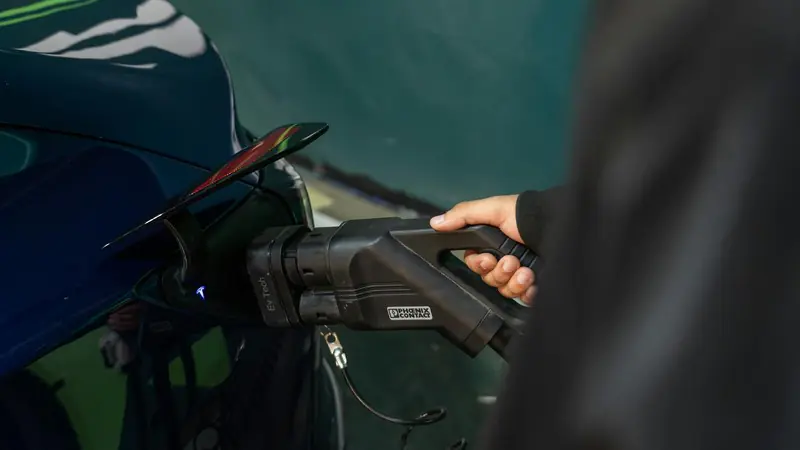
Understanding EV charger manufacturing origin requires looking past the label. Where components come from, how they are tested, and what standards the final product must meet matter far more than where the factory sits on a map.
This article cuts through the hype and gives you a practical framework for evaluating charger quality regardless of the country of origin.
The “Made in USA” Label Explained
The Federal Trade Commission defines “Made in USA” as a product where all or virtually all parts are made and processed in the United States. For a complex electronic device like an EV charger, meeting this standard is expensive and rare.
True American-made EV chargers use domestically sourced printed circuit boards, enclosures, cables, and control modules. This typically adds 20% to 40% to manufacturing cost. Only a handful of brands — including ChargePoint and ClipperCreek — maintain significant US manufacturing operations.
However, “Made in USA” alone does not guarantee superior quality. A poorly designed American charger still performs worse than a well-engineered imported unit. The manufacturing location is a data point, not a verdict.
Chinese Manufacturing: Scale and Sophistication
China dominates global electronics manufacturing for good reason. The supply chain infrastructure, workforce expertise, and production scale in Shenzhen and surrounding regions are unmatched anywhere else in the world.
Many premium brands — including some that market heavily on “American quality” — actually manufacture in China. Some use Chinese OEM factories with their own quality management systems. Others share production lines with multiple brands, differentiating only through firmware and marketing.
This is not inherently bad. Chinese factories that produce for established Western brands typically operate under strict quality control frameworks. The key is knowing which factories and which brands enforce rigorous standards.
Component Sourcing: The Real Quality Story
EV charger manufacturing origin of individual components often matters more than where final assembly happens. Consider the critical parts inside any EV charger:
Power electronics — MOSFETs and IGBTs that switch high currents come primarily from a handful of global suppliers: Infineon (Germany), ON Semiconductor (US), STMicroelectronics (Switzerland/France), and Wolfspeed (US). These are not country-specific products. They are global.
Capacitors — The electrolytic and film capacitors that smooth power delivery come from suppliers like Nichicon (Japan), Panasonic (Japan), and Rubycon (Japan). Japanese capacitors are widely considered the highest quality in the industry.
Connectors — The charging cable and vehicle connector assembly must meet SAE J1772 or CCS standards regardless of manufacturer. Quality of the connector housing, pins, and sealing matters for longevity, especially in outdoor installations.
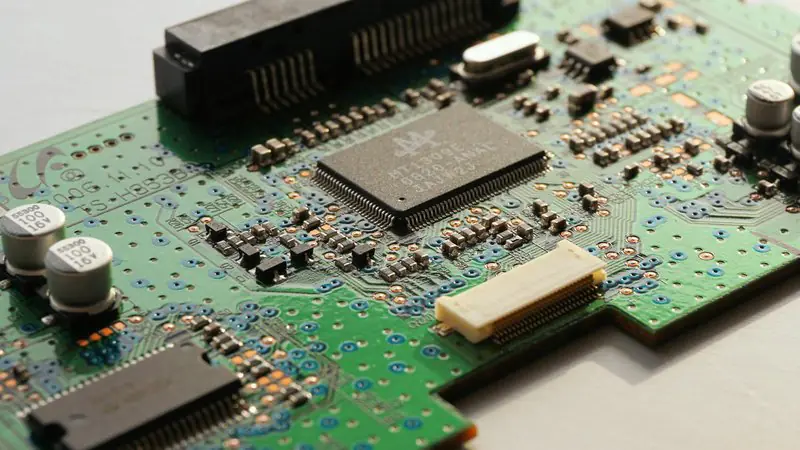
Control boards — The microcontroller and communication circuitry vary widely. Some use automotive-grade chips rated for harsh environments. Others use commercial-grade parts more prone to thermal degradation.
A Chinese-made charger with Japanese capacitors, German MOSFETs, and automotive-grade microcontrollers may outperform a US-made unit with consumer-grade components. USA vs China EV charger quality depends far more on these choices than on the country stamp on the box.
Testing Standards: What Separates Real from Fake
There are essentially three tiers of EV charger testing:
Tier 1: Regulatory minimum — All chargers sold in the US must pass UL 2594 (safety) and FCC Part 15 (electromagnetic compatibility) testing. This is a floor, not a ceiling. Passing these tests means the charger will not electrocute you or interfere with your radio. It does not mean the charger is reliable over years of use.
Tier 2: Third-party certification — Brands that invest in additional testing submit their products to NRTL laboratories for verification of performance claims. ETL, CSA, and TÜV testing goes beyond basic regulatory requirements and verifies spec sheet accuracy.
Tier 3: OEM internal testing — The most rigorous testing often happens inside the factory. Quality manufacturers run accelerated lifetime tests, thermal cycling tests, humidity tests, and real-world simulation tests that far exceed what regulatory bodies require.
Understanding which tier a brand operates at requires digging into their documentation. Most brands do not publish their full test reports. FlagTools requires suppliers to provide third-party test reports as part of the product approval process.
Where Are EV Chargers Made in Practice?
The global EV charger supply chain is genuinely international. Here is a rough breakdown of what you actually get:
Assembled in USA, components globally sourced — This is the most honest “American made” claim for complex electronics. The final assembly happens in the US, typically using imported semiconductors, connectors, and cables. Quality depends on the brand’s component sourcing standards and assembly QC.
Designed in USA, manufactured in China — Many respected American brands design their products domestically but manufacture overseas. This can produce excellent quality if the brand maintains tight design specs and factory oversight. The EV charger industry has many examples of this model.
Pure Chinese import — Low-cost imports from China range from decent to dangerous. Some meet US safety standards. Others cut corners on protection circuits, cable gauge, and connector quality to hit aggressive price points. This is where the most risk lives.
The problem is that origin labels do not tell you which category a product falls into. A “Designed in USA” label might mean the product was truly engineered in California, or it might mean someone registered a domain name in the US.
For more on evaluating EV charger quality, read our Dynamic Voltage Guard explainer and our Hardwired vs Plug-In comparison.
How to Find the Best Made EV Charger Brand
Rather than asking where a charger is made, ask these questions:
Does the brand publish full test reports? Quality manufacturers share third-party lab results, not just the UL mark.
What is the warranty period? Reputable brands back their products with at least 2 to 3 years of warranty coverage. Short warranties signal low confidence in product longevity.
Are protection circuits documented? Brands confident in their safety features list protection functions in detail. Vague language about “comprehensive safety” without specifics is a warning sign.
Does the spec sheet include real-world performance data? Look for derating curves showing output power at different temperatures, efficiency ratings at various loads, and standby power consumption.
Is there a real customer support team? Brands that manufacture in the US typically maintain US-based support operations. Not universal, but a useful signal.
Hidden Costs of Cheap Chargers
A $200 savings on a $500 charger sounds appealing. But consider what you are actually buying:
Cheap chargers often use thinner gauge cables to cut costs. This increases resistance, generates more heat, and creates a genuine fire risk during extended high-current charging sessions.
Budget protection circuits may pass lab tests at room temperature but fail in real-world conditions — summer garages reaching 120°F, winter garages below freezing. The margin between “passes UL test” and “survives years of use” is everything.
Inferior connector contacts corrode over time, increasing resistance and heat generation. You might not notice problems for six months. Then one day your charger refuses to start when you get home with 20% battery remaining.
The best made EV charger brand is not necessarily the most expensive. It is the one that publishes honest specs and stands behind them with real warranty coverage.
What FlagTools Looks For
FlagTools evaluates EV chargers across manufacturing origin, component quality, and documented testing — regardless of where the factory is located. Every product listing includes the full protection specification, third-party test reports where available, and real-world performance data.
The goal is to give buyers transparent information rather than relying on origin labels to make quality judgments.
Bottom Line
The American made EV charger vs Chinese debate misses the point. Country of origin tells you something about cost structure, not quality. EV charger manufacturing origin of critical components is often the same regardless of final assembly location.
What actually matters is whether a brand publishes honest specs, runs rigorous testing, and stands behind their product. The best made EV charger brand for you is the one that makes it easy to verify all of the above.
Stop worrying about the label. Start reading the spec sheet.
Browse EV Chargers at FlagTools
Curated EV chargers with transparent specs, documented testing, and real warranty coverage.
Related: Safety Features Guide (Pillar)
Related: 8-Layer Protection
Related: IP65